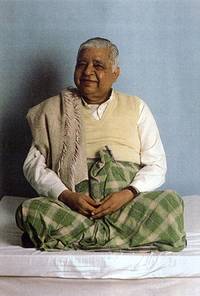
Dear wanderers on the path of Dhamma!

My good wishes are with you all!

Keep the torch of Dhamma shining. Let it radiate into your daily live. Always remember: Dhamma is no escape. It is an art of living- of living in peace and harmony with oneself and with all others. Therefore strive to live a life in Dhamma.

Don´t miss your daily meditation – every morning and evening.

If possible, join a group sitting once a week, to meditate together with other Vipassana-students.

Once a year take yourself the time for a 10-day-course. This is necessary to keep yourself strong and steady and to grow in Dhamma.

Be full of faith, and bravely and smilingly face the difficulties that challenge you.

Renounce all hatred and grudge, all aversion and enmity.

Develop love and compassion, especially for those, who do not understand Dhamma an live an unhappy live.

May your example in Dhamma show them the path to freedom and harmony. May the glow of dhamma in your faces guide more and more suffering people to this path of true happiness.

May all beings be happy, full of peace, liberated.

With all my Mettā

S.N. Goenka
Fundamentals of Practice
A Vipassana course is truly valuable only if it makes a change in your life, and a change will come only if you keep practicing the technique on a daily basis. The following outline of what you have learned is offered with best wishes for your continued success in meditation.
Sīla
In daily life this is practiced by following the Five Precepts:
- to abstain from killing any being,
- to abstain from stealing,
- to abstain from sexual misconduct,
- to abstain from wrong speech,
- to abstain from all intoxicants.
Meditation
The minimum needed to maintain the practice:
- one hour in the morning and one hour in the evening,
- five minutes while lying in bed before you fall asleep and after you wake up,
- if possible, sitting once a week for one hour with other meditators practicing this technique of Vipassana,
- a ten-day course or self-course once a year,
- other free time for meditation.
How to Meditate in Daily Practice:
Ānāpāna
Practice this if the mind is dull or agitated, if it is difficult to feel sensations or difficult not to react to them. You can begin with Ānāpāna and then switch to Vipassana or, if needed, continue observing the breath for the entire hour. To practice Ānāpāna, keep the attention in the area below the nostrils and above the upper lip. Remain aware of each breath as it enters or leaves. If the mind is very dull or very agitated, breathe deliberately and slightly harder for some time. Otherwise, the breathing should be natural.
Vipassanā
Move your attention systematically from head to feet and from feet to head, observing in order each and every part of the body by feeling all the sensations that you come across. Observe objectively; that is, remain equanimous with all the sensations that you experience, whether pleasant, unpleasant or neutral, by appreciating their impermanent nature. Keep your attention moving. Never stay for more than a few minutes at any one place. Do not allow the practice to become mechanical. Work in different ways according to the type of sensations you experience. Areas of the body having different gross sensations should be observed separately by moving the attention part by part. Symmetrical parts, such as both arms or both legs, having similar subtle sensations, may be observed together simultaneously. If you experience subtle sensations throughout the physical structure, you may at times sweep the entire body and then again work part by part.
Mettā
At the end of the hour relax, letting any mental or physical agitation subside. Then, focus for a few minutes on subtle sensations in the body, filling your mind and body with thoughts and feelings of loving-kindness and compassion, with good wishes for all beings. :contentReference[oaicite:3]{index=3}
Outside Meditation Times
Give your full and undivided attention to important tasks. Periodically check whether you are maintaining awareness and equanimity in different situations. When a problem arises, if possible, be aware of your breath or sensations even for a few seconds — this helps you stay balanced.
Dāna
Share whatever good you have acquired with others. Doing so helps to dissolve the old habit of self‑centredness. Meditators understand that the most precious thing to share is Dhamma. Even if they cannot teach directly, they support others in learning the technique. With this pure intention, they donate to support the costs for other students.
This dāna is the sole source of funding for courses and centres around the world.
One Path Only
Do not mix this technique with others. If you have practiced something else before, you may attend two or three Vipassana courses to decide which technique is most suitable. But once you have chosen, devote yourself to that technique alone.
Telling Others About Vipassana
You may describe the technique to others, but you should not teach it yourself. Otherwise, you might cause confusion rather than help. Encourage people who want to meditate to attend a course where a trained teacher guides them.
In General
Progress comes gradually. Mistakes are bound to happen — learn from them. When you realize you have erred, smile about it and start again!
It is common to encounter inattention, drowsiness, restlessness, and other challenges in meditation, but through perseverance you will succeed.
You are welcome to ask your Teacher or Assistant Teachers for advice or help at any time.
Make use of the support of fellow meditators. Meditating together will strengthen you.
Use the meditative atmosphere of centres or Dhamma houses; visit them whenever possible, even for a few days or hours. As a regular student, you may also attend part of a ten-day course, space permitting.
True wisdom is to recognize and accept that every experience is impermanent. With this insight, you will not be overwhelmed by life’s ups and downs. When you maintain inner balance, you can choose actions that bring happiness to yourself and others. In this way, you live in the present moment with equanimity, and you steadily progress toward the ultimate goal: liberation from all suffering.